Answer first: Acupuncture and dry needling use the same kind of fine, solid needle, but they come from different traditions. Acupuncture, as practised by a Registered Acupuncturist (R. Ac.), places needles at selected points based on a whole-person assessment and is used for a wide range of concerns. Dry needling is usually offered by physiotherapists and other regulated professionals and targets tight knots in muscles, called trigger points, mainly for muscle and joint pain. Research supports both for some kinds of pain, but there are few direct comparisons, so neither can be called better overall. The right choice depends on what you need, who is on your care team and what feels right for you.
If you have searched for help with back, neck or shoulder pain in Toronto, you have probably seen both terms, sometimes used as if they mean the same thing. They overlap, but they are not identical, and the differences matter when you choose a practitioner.
This guide compares acupuncture and dry needling side by side, explains who can offer each in Ontario, takes a thorough look at the research, and helps you decide what to ask before you book.
Two approaches, one kind of needle
Rooted in traditional Chinese medicine. A Registered Acupuncturist assesses your whole health picture and places needles at points chosen for you, often resting with them for a period of time.
Rooted in Western anatomy and the idea of myofascial trigger points. Needles are placed into tight bands of muscle to help them release, usually as one part of a physiotherapy or rehabilitation plan.
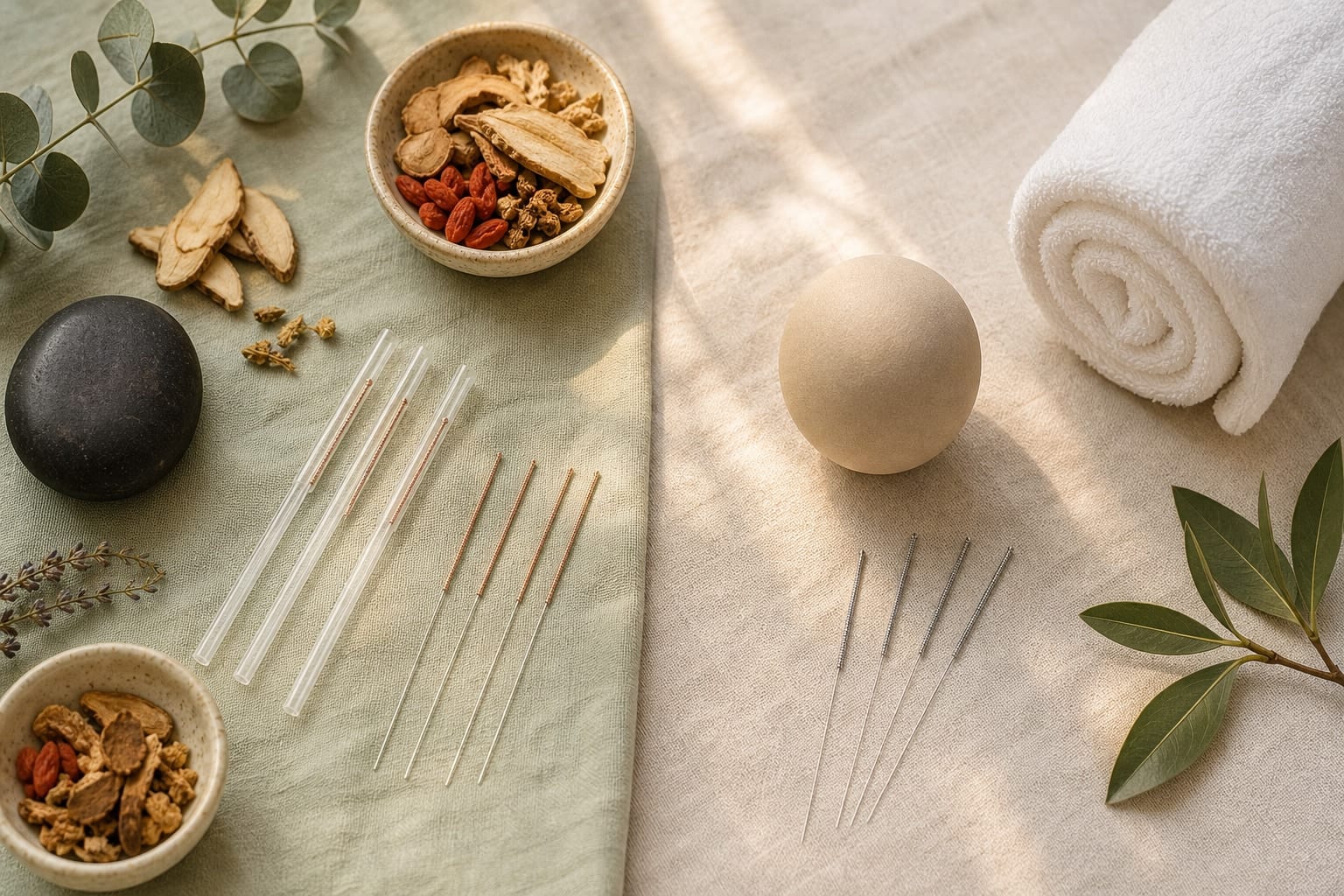
Both use sterile, single-use, solid needles with no medication in them. That is where the word dry comes from: nothing is injected.
Who can offer each in Ontario
Registered Acupuncturists and traditional Chinese medicine practitioners are licensed by the College of Traditional Chinese Medicine Practitioners and Acupuncturists of Ontario, and acupuncture is the focus of their training. Physiotherapists who use needles, including for dry needling, must complete further training and be rostered with the College of Physiotherapists of Ontario, and they use needling within the scope of physiotherapy. Some other regulated professionals, such as chiropractors, also use needles under their own college’s rules.
A gentle word of caution: whoever you choose, check that they are registered with their regulatory college and appear on its public register, and ask about their training in needling. Be wary of anyone who promises a fix in a set number of sessions.
What the research says: a thorough look
Acupuncture and chronic pain
A large analysis published in the Journal of Pain in 2018 pooled data from 20,827 patients in 39 trials of acupuncture for chronic back and neck pain, osteoarthritis, chronic headache and shoulder pain. Acupuncture did better than both sham acupuncture and no acupuncture. The difference from sham was modest, and the benefit had faded by only about 15% a year later.
Dry needling and muscle pain
A 2017 review in the Journal of Orthopaedic and Sports Physical Therapy found very low to moderate quality evidence that trigger point dry needling by physical therapists reduced pain more than sham or no treatment for up to 12 weeks. At six to twelve months the difference was no longer clear, and the authors called for better long-term studies.
Head to head
Studies that compare acupuncture and dry needling directly are few and small. Based on current research, we cannot say that one works better than the other for a particular condition. What we can say is that both are generally safe when done by a properly trained, registered practitioner.
Acupuncture vs dry needling at a glance
| Acupuncture (R. Ac.) | Dry needling | |
|---|---|---|
| Who usually offers it | Registered Acupuncturists and TCM practitioners | Rostered physiotherapists and some other regulated professionals |
| Approach | Whole-person assessment, including sleep, stress, digestion and cycle | Focused on muscles, trigger points and movement |
| Where needles go | Points chosen for your pattern, often on the arms, legs, back, head or ears, sometimes away from the painful area | Mostly directly into tight or tender muscle near the painful area |
| How long needles stay | Often rest in place for a period while you relax | Often in and out quickly, sometimes left for a short time |
| Typical feel | Quick pinch, then a dull ache, tingling or very little; often relaxing | Can feel stronger, sometimes with a brief muscle twitch and next-day soreness |
| Common reasons people go | Pain, headaches, women’s health, stress and sleep, as part of whole-person care | Muscle and joint pain, sports injuries and rehabilitation |
| Insurance | Usually claimed under acupuncture | Usually claimed under the provider’s category, such as physiotherapy |
Which one might suit you?
You might lean toward acupuncture if you want care that looks at more than one symptom, such as pain together with sleep, stress, headaches or your cycle, or if you prefer a calmer, gentler session. You might lean toward dry needling if you are already in a physiotherapy program for a specific muscle or sports injury and your physiotherapist recommends it as part of that plan.
Many people use both. If you do, tell each practitioner about the other, and leave a day or two between needling sessions on the same area so you can tell how each one affects you.
Homeopathy and muscle or joint pain
Some people also see a homeopath for pain, especially when it travels with poor sleep, stress or low mood. There is no reliable research showing that homeopathy relieves pain, and these remedies describe traditional symptom pictures, not proven treatments.
| Remedy | Traditional symptom picture | Read more |
|---|---|---|
| Rhus toxicodendron | Stiff, aching joints and back that are worse on first moving and better for gentle, continued movement and warmth. | Rhus tox guide |
| Cimicifuga racemosa | Aching, tense muscles in the neck and upper back, often with low moods. | Cimicifuga guide |
| Colocynthis | Sharp, cramping pain that is better for firm pressure, often after anger or frustration. | Colocynthis guide |
For a wider view, read our guide to a holistic approach to pain management.
What an acupuncture visit looks like
A first visit starts with a conversation about your pain, your health history and any care you already receive. Then very fine needles are placed while you rest. If you are nervous, read does acupuncture hurt? for a sensation-by-sensation guide. Many people start with weekly sessions for a few weeks and then space them out as things settle.
When to see your doctor
Needling of any kind should not delay a medical assessment. See your doctor if your pain follows a fall or injury, keeps getting worse, wakes you at night, or comes with fever, unexplained weight loss, numbness or weakness.
Seek urgent care for back pain with numbness around the groin or buttocks, new loss of bladder or bowel control or leg weakness, or for sudden shortness of breath or chest pain after any needle treatment.
Acupuncture for pain in North York
At Core Healing Path, Melissa Montoya, HOM, DSHM, R. Ac., is a homeopath and licensed Registered Acupuncturist with a particular focus on women’s health and pain management. If you already see a physiotherapist who uses dry needling, Melissa is glad to plan acupuncture so it complements that care rather than overlapping with it.
Acupuncture visits take place in person at 333 Sheppard Ave E, Suite 5W, in North York. Learn more about acupuncture for pain and acupuncture in Toronto, or read about acupuncture for women’s health and pain and whether acupuncture is covered by insurance in Ontario.
Frequently asked questions
Is dry needling the same as acupuncture?
Not quite. Both use the same kind of fine, solid needle, but acupuncture comes from traditional Chinese medicine and uses a whole-person assessment, while dry needling is based on Western anatomy and targets trigger points in muscles, mainly for muscle and joint pain.
Which is better for back pain, acupuncture or dry needling?
There are few direct comparisons, so neither can be called better. Research supports acupuncture for chronic back pain, and dry needling has shown short-term benefits for muscle pain. The right choice depends on your needs and your care team.
Does dry needling hurt more than acupuncture?
Many people find dry needling more intense, because needles go into tight muscle and can cause a brief twitch and next-day soreness. Acupuncture is often gentler and relaxing, but everyone’s experience differs.
Who can do dry needling in Ontario?
Physiotherapists who have completed further training and are rostered with the College of Physiotherapists of Ontario, along with some other regulated professionals within their own scope. Registered Acupuncturists are licensed by the College of Traditional Chinese Medicine Practitioners and Acupuncturists of Ontario.
Is dry needling covered by insurance?
Dry needling is usually claimed under the provider’s own category, such as physiotherapy, while acupuncture by a Registered Acupuncturist is usually claimed under acupuncture. Check your plan for each.
Can I have acupuncture and dry needling at the same time?
Many people use both. Tell each practitioner about the other, and leave a day or two between needling sessions on the same area.
Not sure which approach fits your pain?
Book a free 15-minute consultation to talk through your pain, the care you already have and whether acupuncture feels right for you. You can also call Melissa at +1 (647) 671-1619.
About the author: Melissa Montoya, HOM, DSHM, R. Ac., is a homeopath and licensed Registered Acupuncturist at Core Healing Path in North York, with a particular focus on women’s health and pain management. Read Melissa’s bio.
Disclaimer: This article is for general education and is not medical advice, diagnosis or treatment. Acupuncture, dry needling and homeopathy do not replace care from your doctor, physiotherapist or other health care providers, and none can guarantee relief from pain. Speak with your medical team before changing any part of your treatment, and seek urgent care for severe or worrying symptoms.