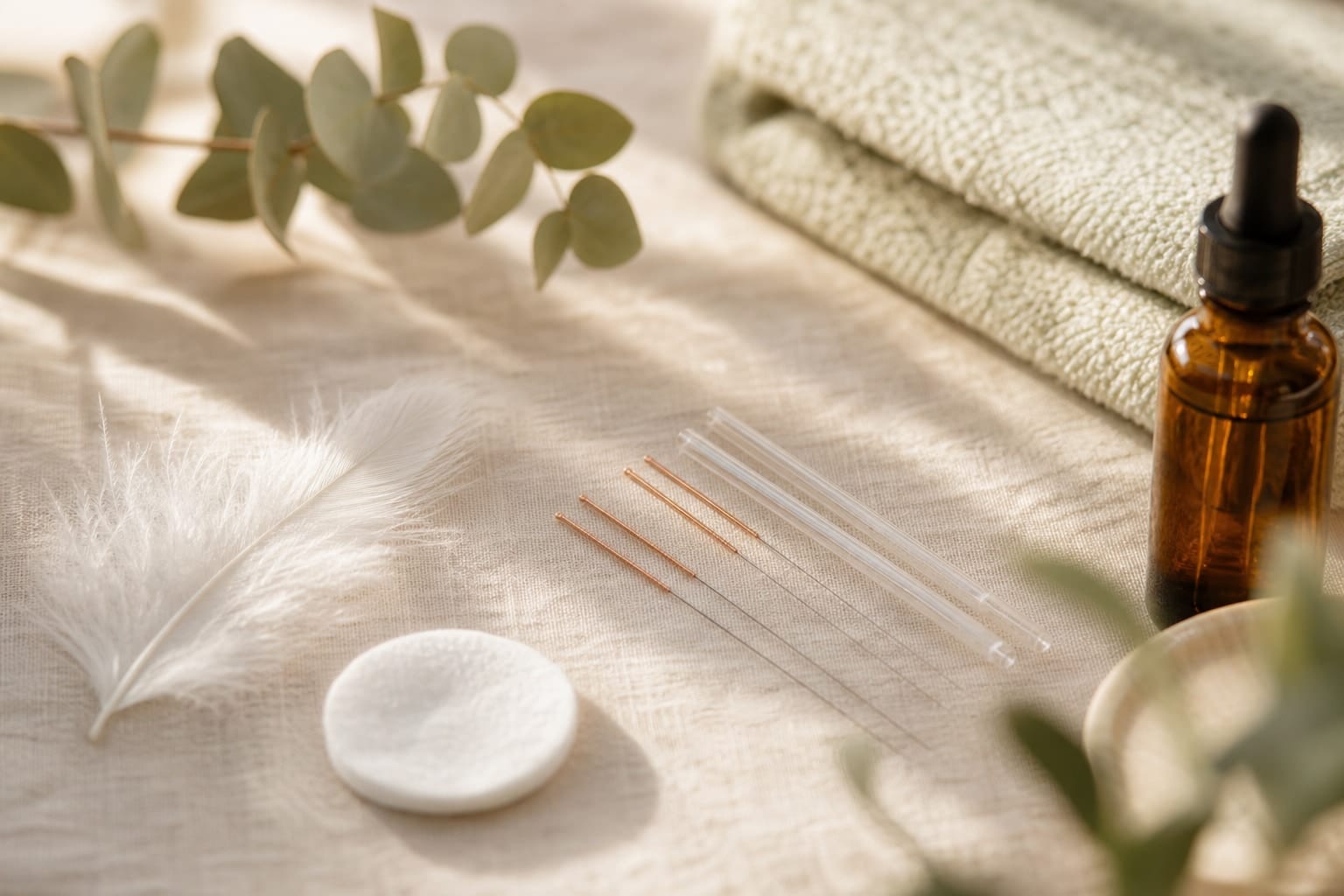
Answer first: For most people, acupuncture does not hurt the way an injection or blood test does. Acupuncture needles are solid and very fine, often about 0.16 to 0.30 mm wide, compared with roughly 0.8 mm for a common blood-test needle. You may feel a quick pinch as a needle goes in, then a dull ache, heaviness, tingling or warmth, or very little at all. Many people find sessions deeply relaxing. Sharp or burning pain that lasts is not normal: tell your acupuncturist and the needle can be adjusted or removed. At Core Healing Path in North York, Melissa Montoya is a licensed Registered Acupuncturist who can start gently if you are nervous.
Fear of needles is one of the most common reasons people put off trying acupuncture. That makes sense: most of us only know needles from vaccines and blood tests. Acupuncture is a very different experience, and knowing what to expect takes away much of the worry.
This guide explains why acupuncture feels different, what each sensation usually means, what the safety research shows, how to prepare if you are anxious, and when to talk to your doctor first.
Why acupuncture feels so different from a needle at the doctor’s
Injection and blood-test needles are hollow so fluid can pass through them. Acupuncture needles are solid and hair-thin, so they part the skin rather than cut it.
Needles are usually tapped in through a thin guide tube in a fraction of a second. Most go only a few millimetres to a couple of centimetres deep, depending on the area.
In Ontario, Registered Acupuncturists (R. Ac.) are licensed by the College of Traditional Chinese Medicine Practitioners and Acupuncturists of Ontario and use sterile, single-use needles that are discarded after each treatment.
What the research says: a thorough look
Serious problems are rare
In the York acupuncture safety study, published in the BMJ in 2001, practitioners recorded 34,407 treatments. There were no serious adverse events. They reported 43 significant minor events, about 1.3 per 1,000 treatments, such as nausea, feeling faint, dizziness, or a needle forgotten at the end of a session.
Mild, short-lived reactions are common
The same study recorded 10,920 mild, passing reactions. Many were pleasant, such as feeling relaxed or energized; others were small bruises, a drop of blood where a needle came out, or brief soreness at a point.
What research cannot tell you
No study can predict exactly how acupuncture will feel for you. Sensitivity varies from person to person, from area to area of the body, and even from day to day with stress, sleep and your menstrual cycle.
A gentle word of caution: strong pain is not a sign that acupuncture is working better. You are always in charge of your session, and you can ask for a needle to be moved or removed, or for the session to stop, at any time.
What acupuncture feels like, sensation by sensation
| Sensation | What it usually means | What to do |
|---|---|---|
| A quick pinch or prick | The needle passing through the skin; it fades within a second or two. | Nothing; breathe out slowly as the needle goes in. |
| Dull ache, heaviness or pressure | A common response at the point, often called de qi in traditional Chinese medicine. | Normal; mention it if it feels too strong. |
| Tingling, warmth or a spreading feeling | Another common, usually brief response. | Normal; tell your acupuncturist if it bothers you. |
| Sharp, burning or electric pain that lasts | The needle may be too close to a sensitive spot. | Tell your acupuncturist right away so it can be adjusted or removed. |
| Feeling sleepy or deeply relaxed | Very common once all the needles are in. | Enjoy it; take a moment before getting up. |
| Light-headed, sweaty or queasy | A brief drop in blood pressure, more likely when hungry or very anxious. | Say so at once; needles can be removed and you can lie down and rest. |
Areas that tend to feel more sensitive
- Hands and feet, especially near the fingertips and toes
- The face and scalp
- Points over thin skin or close to bone
Fleshier areas such as the back, shoulders, buttocks and thighs usually feel the least. If you know a part of your body is sensitive, say so and your treatment can be planned around it.
If you are nervous about needles
- Tell us when you book. Melissa can start with fewer needles and choose less sensitive points for your first visit.
- Eat a light meal one to two hours before, and drink some water.
- Wear loose clothing so arms and legs can be reached easily.
- Breathe out slowly as each needle goes in, and look away if that helps.
- Ask questions. Knowing what is happening and why makes the experience calmer.
- Remember you can stop. Every session goes at your pace.
If anxiety is a bigger part of your life than one appointment, read our article on acupuncture for anxiety in Toronto.
Homeopathy and pre-appointment nerves
Some people like to talk with a homeopath about the fear and tension that come up around medical appointments. These remedies describe traditional symptom pictures, not proven treatments, and a homeopath chooses based on the whole person.
| Remedy | Traditional symptom picture | Read more |
|---|---|---|
| Aconite | Sudden, intense fear or panic that comes on quickly, often with a racing heart. | Aconite guide |
| Arsenicum album | Anxious, restless and worried about health; wants reassurance, order and company. | Arsenicum album guide |
| Ignatia | Emotional tension, sighing and a lump-in-the-throat feeling, often after stress or grief. | Ignatia guide |
Our homeopathy page explains how a consultation works.
After your session: what is normal
Most people feel calm, a little sleepy or more energized afterwards. A small bruise or slight tenderness at a point can last a day or two. Drink water, eat something, and give yourself an easy rest of the day if you can. Contact us if soreness lasts more than a couple of days or a point looks red, hot or swollen.
When to talk to your doctor first
Acupuncture is suitable for most adults, but tell your acupuncturist and check with your doctor if:
- You take blood thinners or have a bleeding disorder
- You have a pacemaker or other implanted device (electro-acupuncture is avoided)
- You are pregnant or might be pregnant
- You have diabetes with reduced feeling in your feet, a skin condition at the treatment area, or a weakened immune system
- You have fainted with needles or blood tests before
Seek urgent care if you have sudden shortness of breath, chest pain, or a fever with a red, swollen point after any needle treatment. These reactions are rare, but they need medical attention right away.
Gentle acupuncture in North York
At Core Healing Path, Melissa Montoya, HOM, DSHM, R. Ac., is a homeopath and licensed Registered Acupuncturist with a particular focus on women’s health and pain management. She takes time to explain each step, and first visits can start gently for anyone who is unsure about needles.
Acupuncture visits take place in person at 333 Sheppard Ave E, Suite 5W, in North York. Learn more about acupuncture in Toronto and acupuncture in North York, or read our guides to whether acupuncture is covered by insurance in Ontario, acupuncture vs dry needling and acupuncture for women’s health and pain.
Frequently asked questions
Does acupuncture hurt?
Most people feel a quick pinch as the needle goes in, followed by a dull ache, tingling, warmth or very little. Acupuncture needles are solid and much finer than injection needles, and many people find sessions relaxing. Sharp pain that lasts is not normal and should be mentioned straight away.
How thin are acupuncture needles?
Acupuncture needles are often about 0.16 to 0.30 mm wide, compared with about 0.8 mm for a common blood-test needle. They are solid rather than hollow, which is one reason they feel so different.
What is the dull ache I feel during acupuncture?
A dull ache, heaviness or tingling at a point is a common response, often called de qi in traditional Chinese medicine. It usually fades quickly. Tell your acupuncturist if it feels too strong.
Will I bleed or bruise after acupuncture?
Sometimes a tiny drop of blood or a small bruise appears where a needle was. In a large study of more than 34,000 treatments, mild reactions like these were common and short-lived, and there were no serious adverse events.
Can I have acupuncture if I am afraid of needles?
Yes. Tell us when you book. Your first session can use fewer needles at less sensitive points, and you can pause or stop at any time.
Is acupuncture covered by insurance in Ontario?
OHIP does not cover acupuncture, but many extended health plans include treatment by a Registered Acupuncturist. Coverage varies, so check your plan before you book.
Curious about acupuncture but unsure about needles?
Book a free 15-minute consultation to ask anything about how acupuncture feels and what a first visit involves. You can also call Melissa at +1 (647) 671-1619.
About the author: Melissa Montoya, HOM, DSHM, R. Ac., is a homeopath and licensed Registered Acupuncturist at Core Healing Path in North York, with a particular focus on women’s health and pain management. Read Melissa’s bio.
Disclaimer: This article is for general education and is not medical advice, diagnosis or treatment. Acupuncture and homeopathy do not replace care from your doctor or other health care providers, and neither can guarantee relief from any symptom. Speak with your medical team before changing any part of your treatment, and seek urgent care for any worrying symptoms.